

Stop One: Welcome Break Gretna Green Services, A74M, Jct 21
- Time Stopped: 15:15
- Duration: 30 minutes, with zero charge achieved.
- Battery: 27%
Gretna Green Services was a familiar stop, now boasting several new chargers. Yet, after attempts with four different units from three manufacturers, I had to move on, suspecting a compatibility issue between the Mercedes and the chargers. Interestingly, the car’s satnav had recommended the Blacksmiths Shop BP Pulse, which I initially disregarded.
Stop Two: Gretna Green Famous Blacksmiths Shop
- Time Stopped: 15:45
- Duration: 120 minutes
- Charge Achieved: Back to 80%
Following the initial setback, I decided to trust the Mercedes’ navigation system. Although the charger at this location initially malfunctioned, BP Pulse support had me charging after a 15-minute delay. Realising it was a slow charger, it was too late; I capitalised on the time by working over coffee and making some calls.
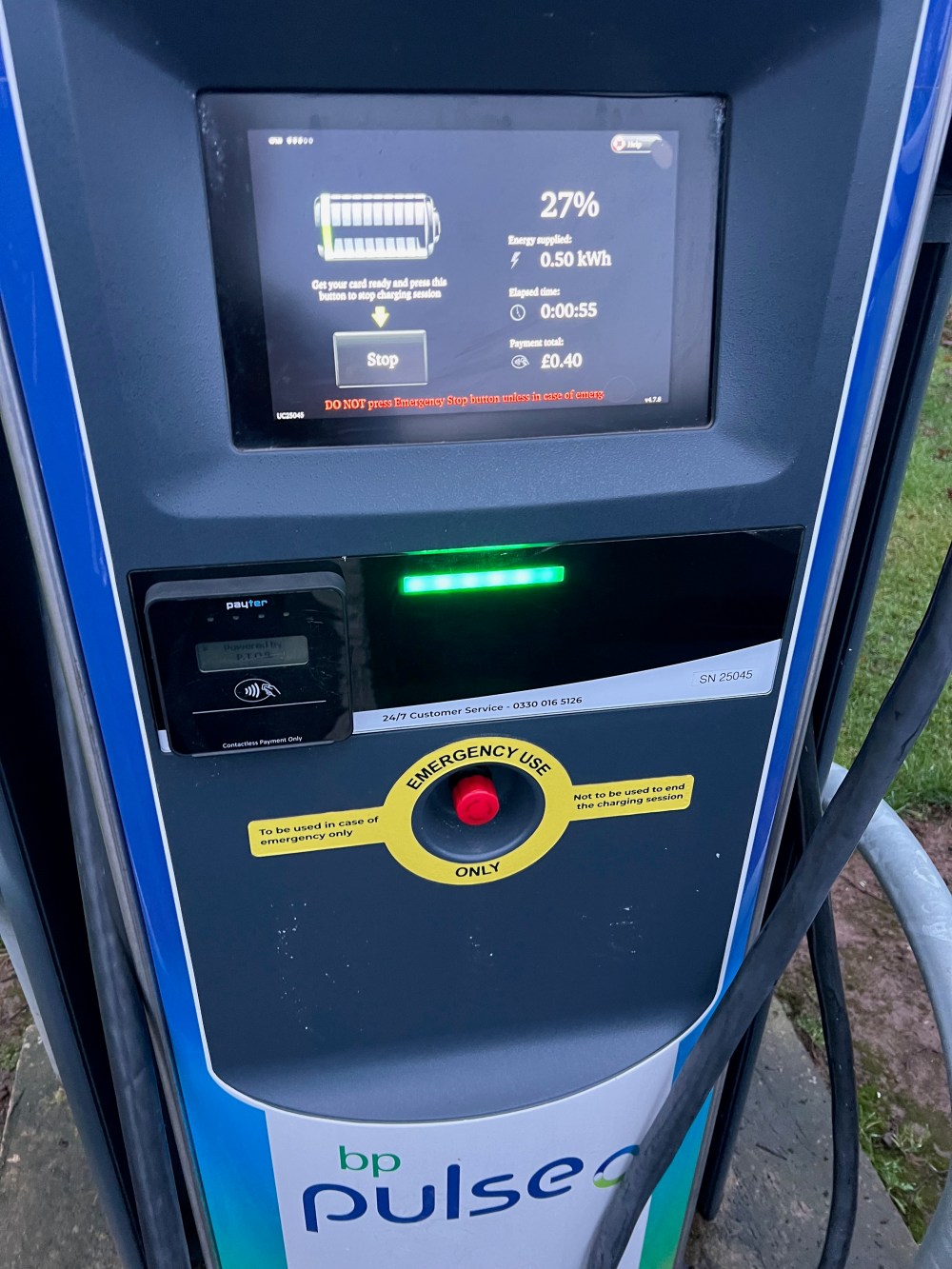
Stop Three: Lymm Service Station, Booth’s Hill Rd
- Time Stopped: 19:50
- Duration: 60 minutes
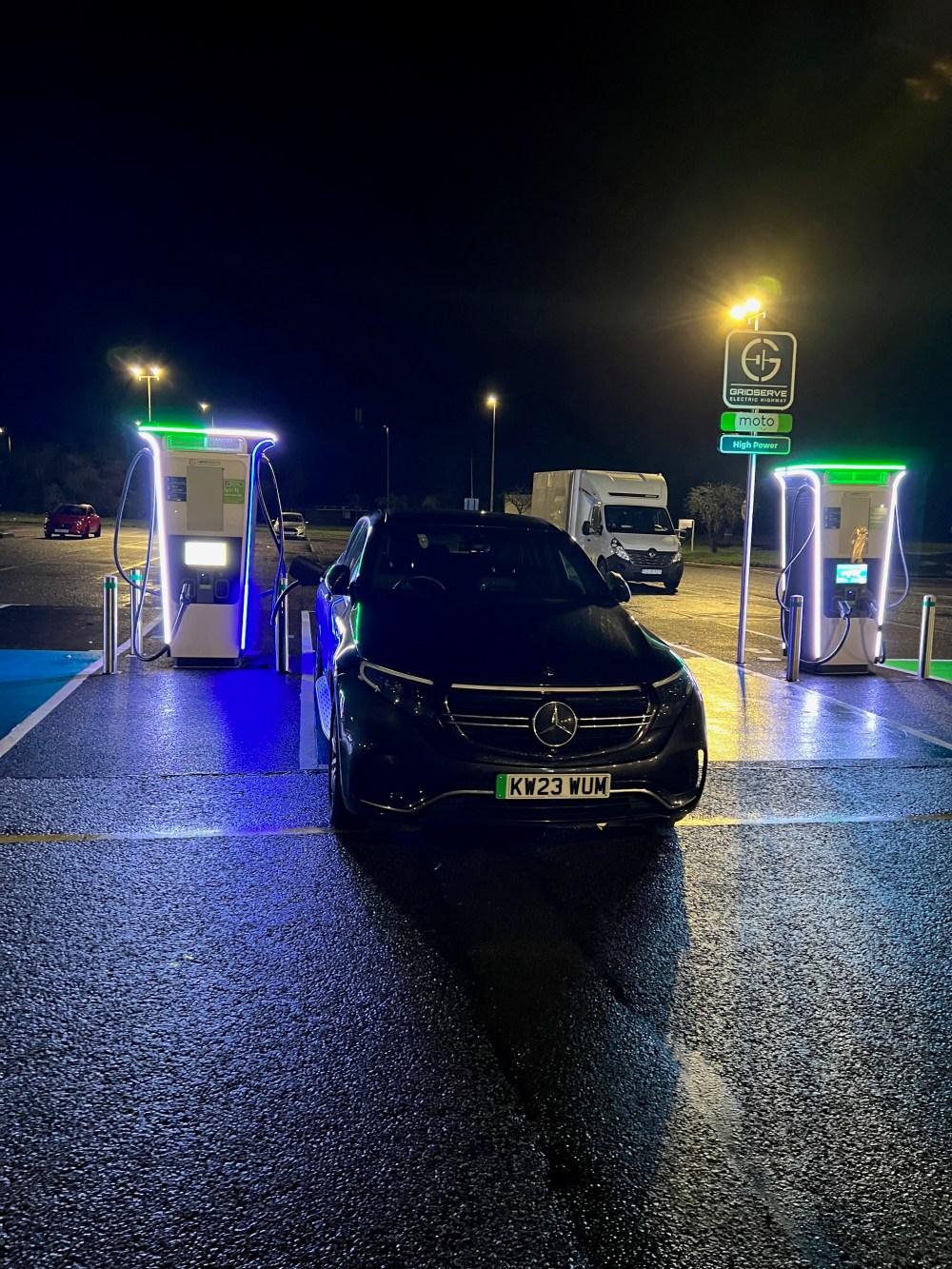
Opting for a Gridserve charger, I found it operational but limited to 50Kw, reinforcing the importance of charger selection.

Stop Four: Watford Gap Services Southbound, Northampton
- Time Stopped: 22:13
- Duration: 1.5 hours
- Charge Achieved: 80%
Watford Gap’s ultra-fast grid was a relief, with ten chargers available. This gave me confidence that the networks are getting better.
This efficient stop underscored the Mercedes’ disappointing maximum charge rate of 100 KW compared to Tesla’s 250Kw and cheap other manufacturers. I ensured enough charge for the remainder of my journey to Sittingbourne.
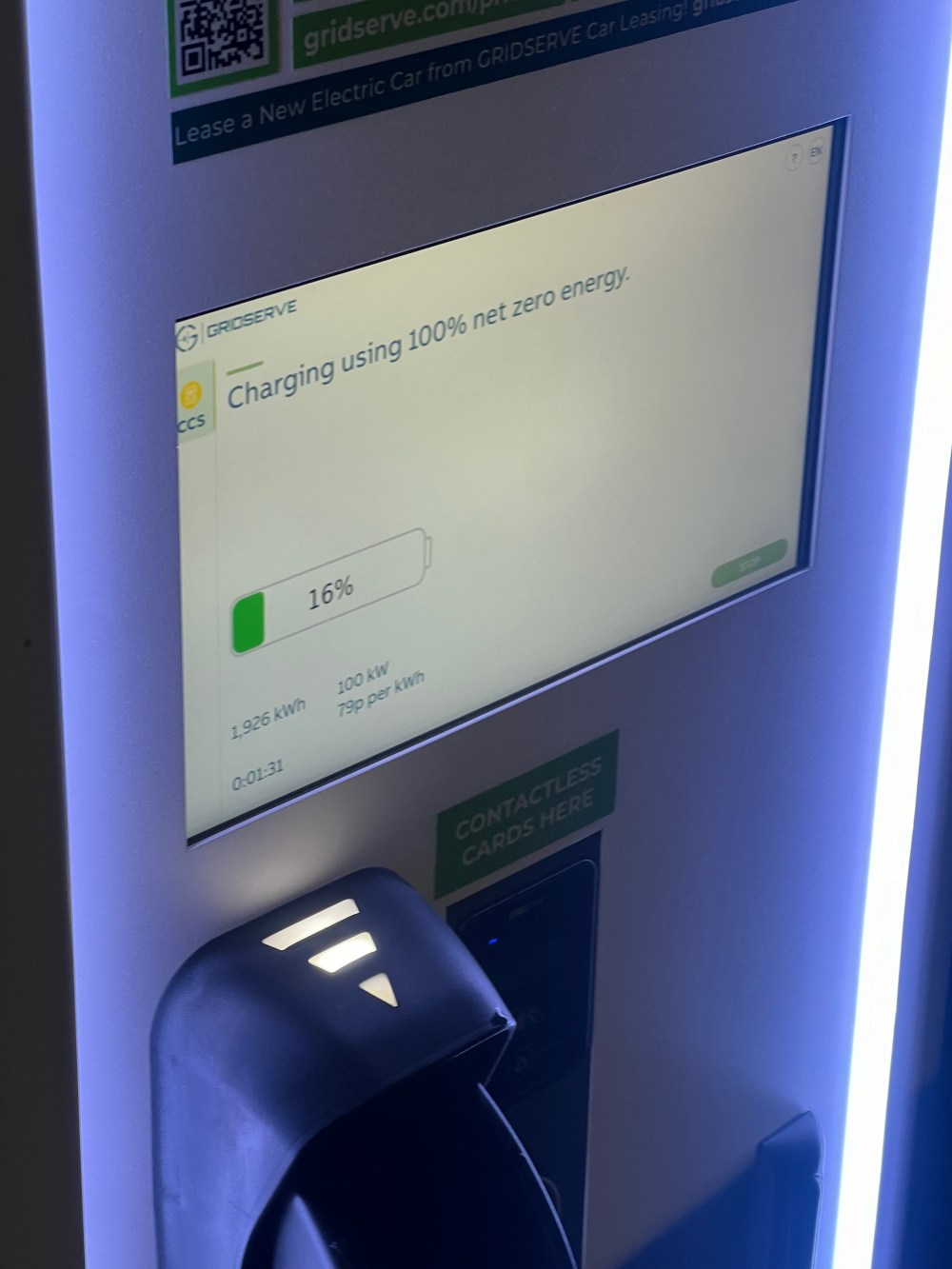
NO Overnight Charging
The absence of overnight charging options highlighted a major EV touring challenge: planning overnight stays with charging capabilities, especially without prior route experience, is another reason EV cars will stress people out. I was thinking about my Dad; this would be a significant stress, and I wouldn’t blame him.
CLIENTS OFFICES NEXT DAY (STOP FIVE)
My client has around eight free charging stations at their office in Sittingbourne, Kent. I arrived early and plugged my car into a slow charger, planning to leave it there for 8 hours. However, I had to drive to another part of the site, about two miles away. When I returned, I discovered that the charging space was taken. This messed up my plans to fully charge my car and have a range of around 200 miles to get a good distance back up north before midnight.
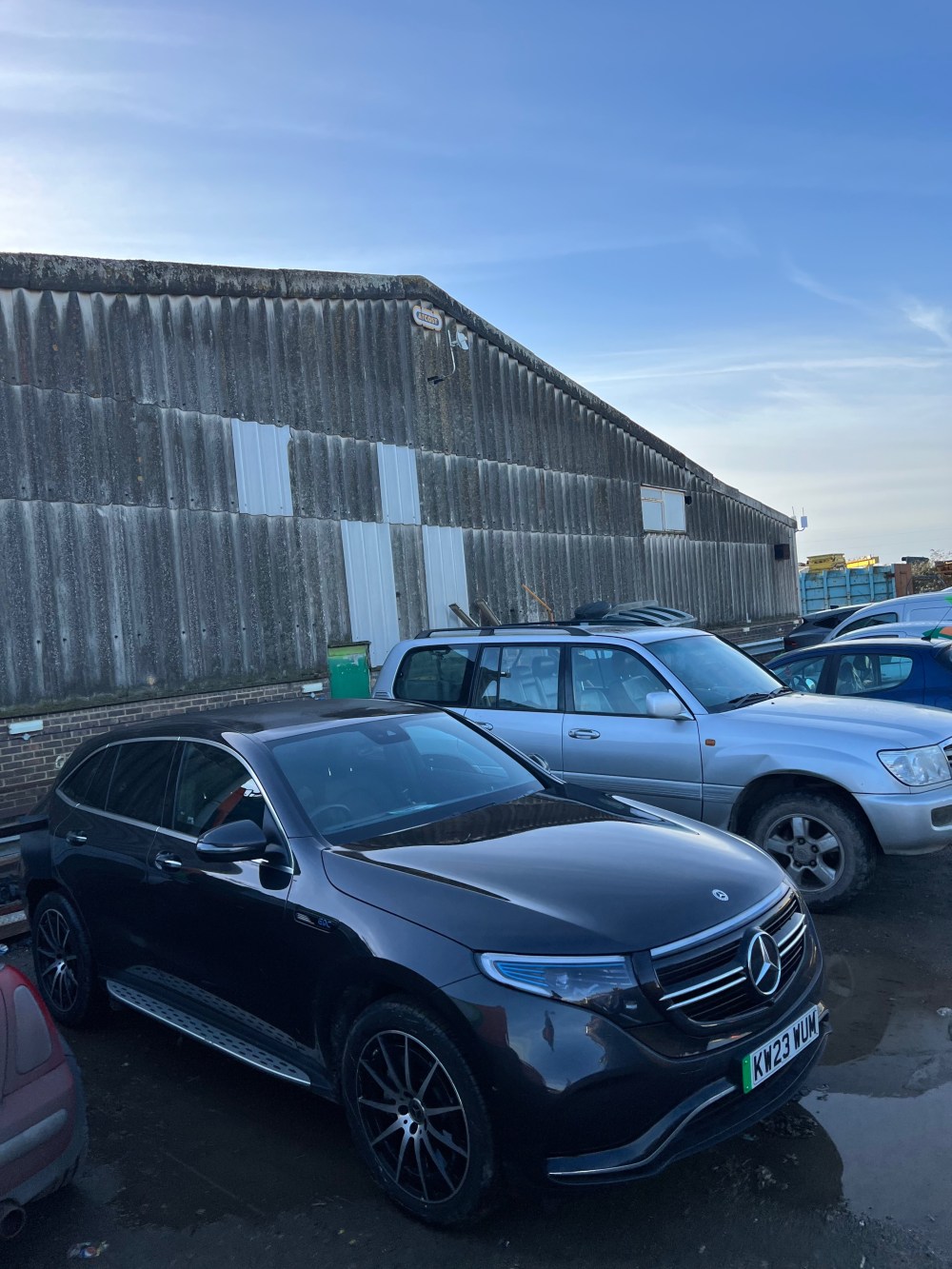
I was feeling good until I had to move the car from clients charging bay to another part of the site a mile away.
Stop SIX: Moto Thurrock, M25, Grays
- Time Stopped: 16:00
- Duration: 1.45 hours, for a planned 1-hour charge
I was lucky, I got across the Thames via Dartford in good time. Despite meticulous planning, the charger malfunctioned five minutes after I’d walked away and wasted 45 minutes when I thought the car was charging!
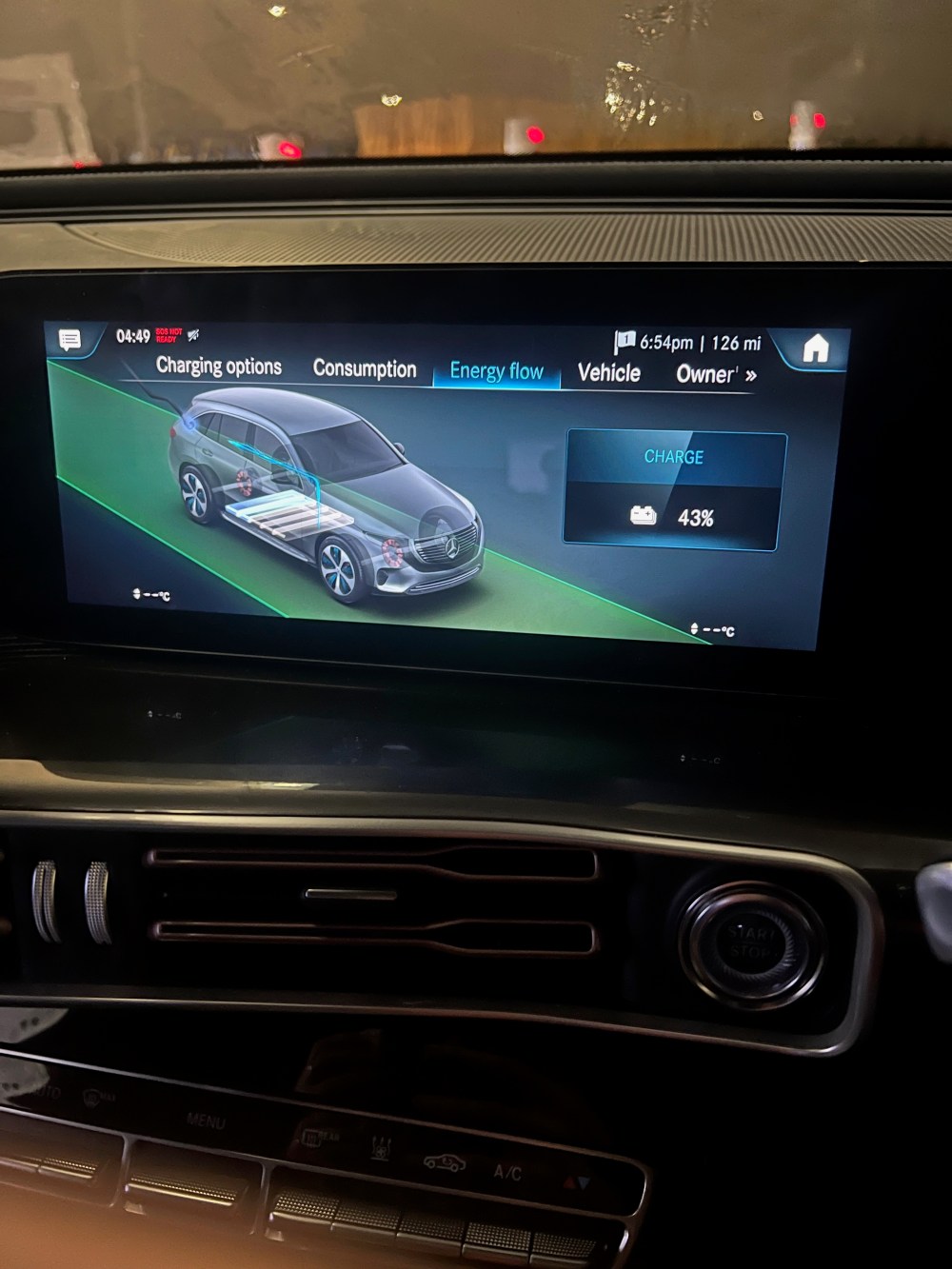
45 minutes were wasted in the service station when the car stopped charging. Moved to another bay and watched it while I rang some friends to kill some time.
Stop SEVEN: Moto Blyth, A1(M)
- Duration: 1 hour
- Charged: 65%
Here, the charging speed of the “luxury” Mercedes was again a bottleneck, along with recurrent payment issues, underscoring the need for alternative payments.
Stop EIGHT: SOUTHWAITE M6 SOUTH MOTO, M6, Carlisle
- Duration: 1 hour
This final stop went smoothly, allowing for an hour of sleep while charging. I found a good point about the car, the seats when right back. I got home to Falkirk, Scotland, around 2 am to be met by my lovely black lab!
Lessons Learned
- Opt for a Tesla if you want a simpler life, for both the car and charging infrastructure benefits.
- Otherwise, seek out cars that can charge with speeds of 150KW or higher, ideally 200KW+.
- A 300-mile-plus range is crucial for UK winter conditions, allowing for at least 200 miles of motorway travelling.
- Conduct a test run to familiarise yourself with the EV and charging networks without the pressure of time-sensitive commitments, certainly not with your family!
- Be prepared for issues and have a plan B and C, maybe even D.
- Download and familiarise yourself with charging network apps and tools like Zap-Map.
- Avoid the Mercedes EQC400 for long-distance EV travel.
- Plan your journey around charging while stopping for food and toilets.
- Download the car manufacturer app so you can check on the charging progress.
- Understand charging rates, what the car will take and terminology, see below
Charging Rates & TERMS
Although the figures vary from model to model, the miles of range you can add from an hour of charging average out at around…
- 3.7kW – up to 15 miles
- 7kW – up to 30 miles
- 22kW – up to 90 miles
- 50kW – up to 90 miles on a 30-minute charge
- 150kW– up to 200 miles on a 30-minute charge
- 350kW – over 200 miles in just 20 minutes (although few cars are capable of this yet)
Rapid (50kW to 100kW ) – Not quick enough for motorway driving!
Ultra-rapid (150 to 350kW) – Costs more, but these are the ones you need on road trips.
Summary
Looking forward to repeating this again but with a car with a better range and ability to rapidly charge at least 150KW plus.
 Jamie Clague